The Commander Knows the Troops
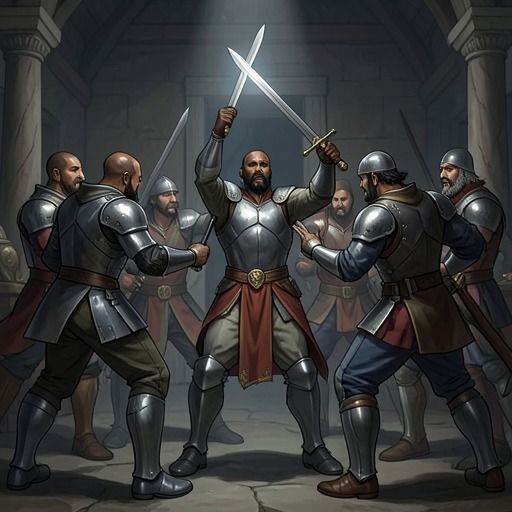
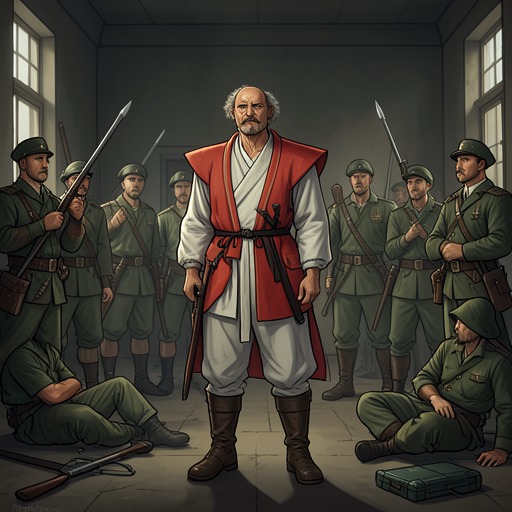
The Book of Five RingsThe Commander Knows the Troops is Miyamoto Musashi’s principle of strategic command: the strategist should understand the enemy as though the enemy were among his own troops, then use that understanding to direct the enemy’s actions. The rule makes command more than the issuing of orders. It joins knowledge of people to the ability to shape their movement, linking the intimate contest of a duel with the organization of an army and the larger responsibilities of rule.
The Principle of Command
The maxim appears in the Fire Book as a general rule of Miyamoto Musashi’s strategy, not as a technique confined to one weapon or formation. Its central reversal is to treat the opposing force as one’s own: by imagining the enemy as troops under one’s command, the strategist can move him at will and chase him around. The opponent remains an adversary, but the strategist’s perspective changes from merely resisting his actions to anticipating and directing them.
This is a principle of practical knowledge rather than a promise that the enemy can literally be controlled. Musashi presents mastery as the condition for applying it: the strategist must learn to think in this way, turning insight into an advantage in action. The maxim therefore makes knowledge of the opponent an active instrument. Understanding matters because it changes what the strategist can cause the opponent to do.
From the Duel to the Army
The rule belongs to a broader effort to carry principles of individual combat into large-scale strategy. Musashi says that the study of strategy concerns overcoming men, whether victory is won by crossing swords with individuals or by engaging large numbers. He also argues that training alone with a sword can teach a strategist to understand an enemy’s strategy, strength, and resources, and to apply that knowledge even against a much larger force. The commander’s ability to read and direct an opponent thus grows from the same discipline as a fighter’s ability to prevail in a duel.
The Five Books give that extension a deliberate structure. The Way is divided into Ground, Water, Fire, Wind, and Void, with the Fire Book addressing strategy in combat. Musashi’s claim that one may learn the principle of defeating many by mastering the contest with one gives the commander’s maxim its larger reach: individual practice is not a separate subject from military leadership, but a means of grasping how action and opposition work at different scales.
Knowing People and Their Disposition
The maxim also resonates with Musashi’s account of command through the carpenter. The foreman must know his workers’ abilities and limitations, assign each person appropriate work, circulate among them, and ask nothing unreasonable. He must also know their morale and spirit and encourage them when necessary. Musashi identifies this management of people as a principle of strategy: effective command begins in careful knowledge of those whose work must be coordinated.
On the battlefield, that knowledge includes reading the enemy’s changing disposition. Musashi instructs the strategist to determine whether the enemy’s spirit is flourishing or waning, observe the men, and seek the best position; the commander then moves his own troops accordingly. In a duel, the same attentiveness means recognizing the opponent’s school, quality, strengths, and weaknesses, then attacking at an appropriate moment. The Commander Knows the Troops gathers these forms of judgment into one idea: command depends on seeing what people can do and how their condition may be turned into action.
Command, Discipline, and the Way
Musashi places strategic command within responsibilities broader than victory in combat. In large-scale strategy, the superior person manages many subordinates, bears himself correctly, governs the country, fosters the people, and preserves the ruler’s discipline. The commander’s knowledge of troops is therefore connected to the maintenance of order and to the welfare of those under authority, not only to maneuver against an enemy.
The rule also illustrates the book’s practical teaching method. Musashi repeatedly insists that readers must research the principles, train diligently, and learn to apply them rather than mistake written explanation for mastery. His account of other schools likewise resists rigid classification: traditions differ in their interpretations, and the Ichi school claims no inner gate or hidden meaning in sword attitudes. Within that open, practice-centered Way, knowing the troops is not a fixed formula. It is a trained capacity to understand people, judge their condition, and make that understanding effective in strategy.